
Known items separated from guesses
We separate confirmed details from assumptions, so engineering questions stay focused.
Send the equipment, connector or terminal references, drawing, BOM, wire list, photo or old sample you already have. We separate confirmed requirements from open questions before factory review and quotation.
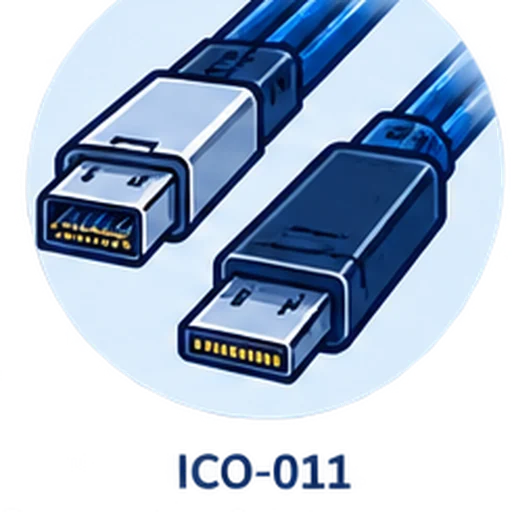 EndpointsApplication
 Drawing / sample
 Application firstHost and target are checked before a cable is suggested.Endpoints checkedConnector form, direction and cable exit stay visible in the RFQ.
 Evidence by projectDrawings and inspection files must match the quoted cable.
 One RFQ trailQuestions, samples and document requests remain tied to one inquiry.
You do not need to solve every connector, direction or pinout question before contacting us. Send what you have, and we will identify what the selected factory must confirm before price, sample and lead time are meaningful.
We separate confirmed details from assumptions, so engineering questions stay focused.

The RFQ is matched to a factory route that fits the connector, cable construction, quantity and project stage.

You receive a quote, clarification request or sample suggestion based on what can actually be confirmed.
Drawings, inspection, performance or compliance documents are checked for the exact quoted configuration.
A first inquiry is worth sending when there is a real equipment path, replacement need, prototype plan or purchasing target—even if the technical definition is incomplete.
You have equipment models, an existing cable, a photo or a failed sourcing reference.
Standard listings do not match the required endpoints, length, exit, mapping or packaging.
You need a quote based on forecast, target delivery, labeling or commercial packaging.
The connector looks correct, but direction, lane topology, pinout or platform fit is uncertain.
Enough to begin: your email, the product or application, and a short requirement.
Request a Cable Quote →
Internal server and storage interconnect projects where lane count, endpoint, orientation and platform context must be matched.
Open family page →Compact internal cable requirements involving straight, angled, breakout or device-side configurations.
Open family page →
Server and storage projects using internal or external high-density SAS-family connector configurations.
Open family page →Legacy and current storage interconnect projects where forward/reverse breakout and endpoint definition matter.
Open family page →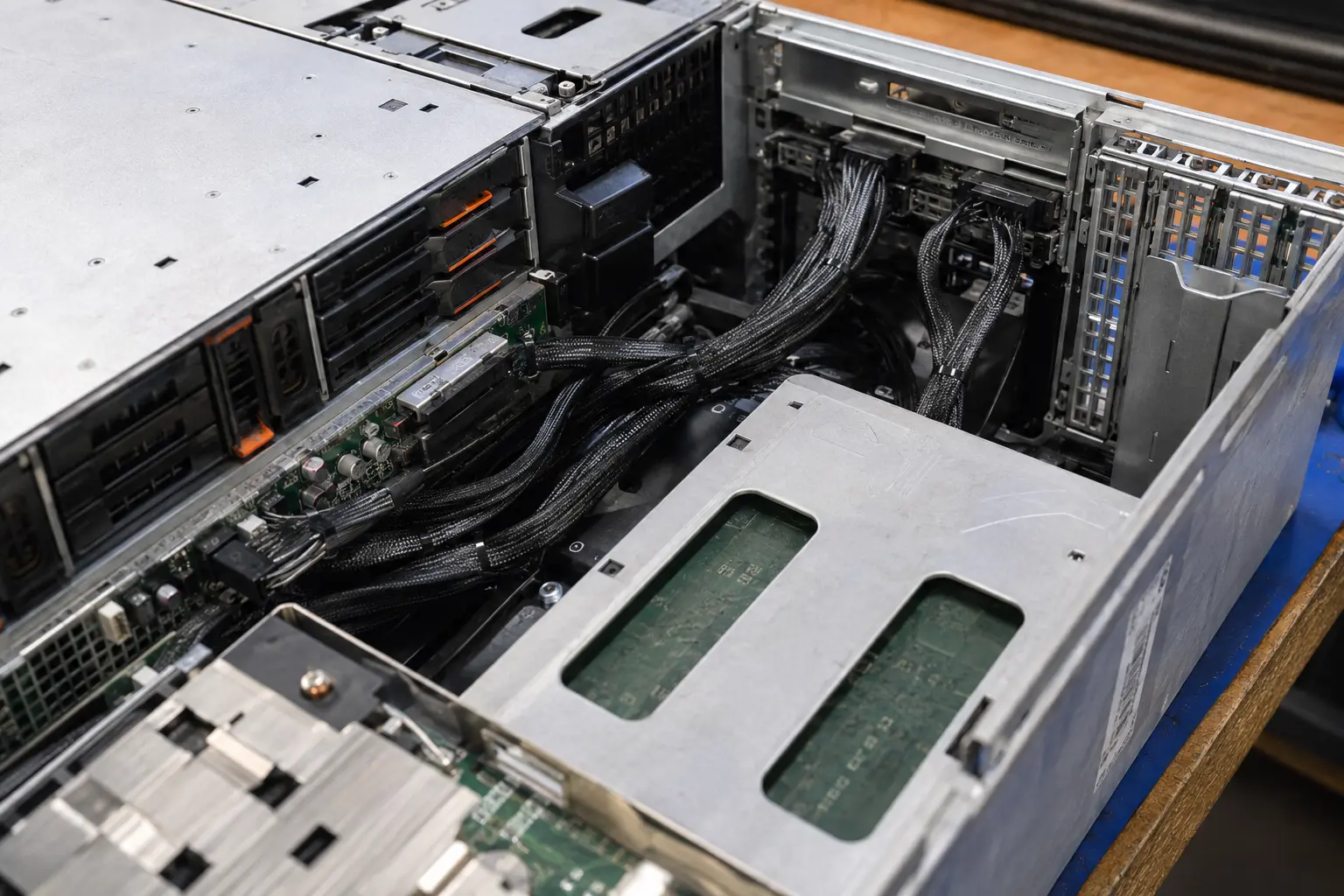
Cross-family OCuLink endpoint projects where connector form, equipment roles, lane topology and routing must be confirmed.
Open family page →
GPU, accelerator and expansion-system cable projects where slot architecture, lane topology, power boundary and chassis fit must be reviewed.
Open family page →Each application page starts from the equipment path first, then connects it to cable families and RFQ questions.
These entry points match the terms engineering and purchasing teams use when a standard marketplace cable is not enough. Each page leads to a specific technical review instead of a generic product list.
MCIO 4i, 8i and cross-family routing for AI server, storage controller and backplane projects.
Open sourcing route →4i and 8i requirements for U.2, SATA breakout, JBOD, RAID and compact server storage.
Open sourcing route →SFF-8643 routes to SATA, U.2 and OCuLink with forward/reverse direction and plug geometry checked.
Open sourcing route →OCuLink sourcing for server, storage and PCIe equipment where connector form and lane path must match.
Open sourcing route →Application-led sourcing for GPU, accelerator, NIC, riser and backplane interconnect projects.
Open sourcing route →Use the equipment model, drawing, old sample or connector photos when no listed route fits exactly.
Open sourcing route →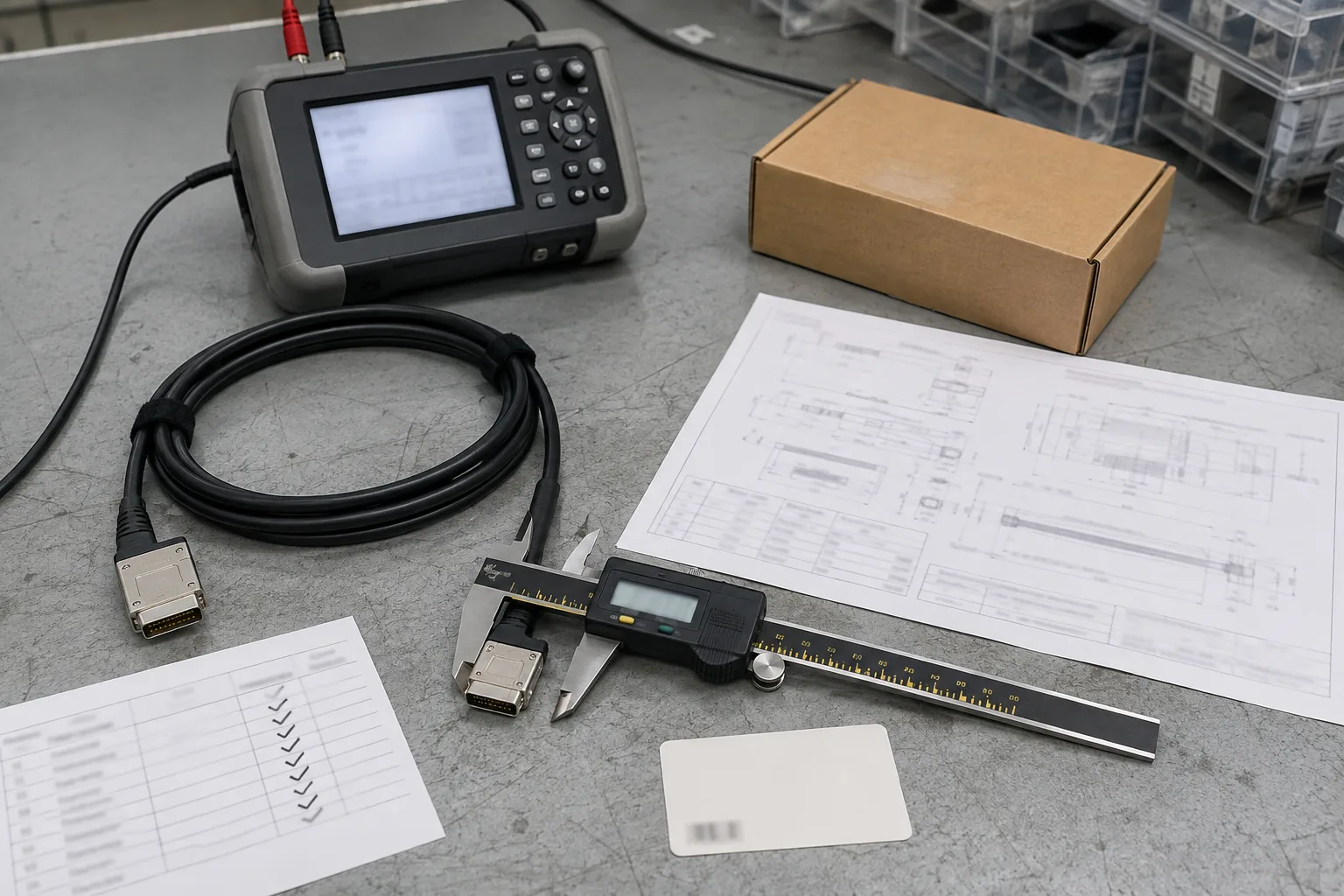
We do not apply a drawing, test result or compliance file from a similar-looking cable. Tell us what purchasing needs, and our team will confirm what applies to the exact configuration.
Dimensions, wiring and revision references are checked against the quoted configuration.
Continuity, visual inspection and first-article needs are defined before order approval.
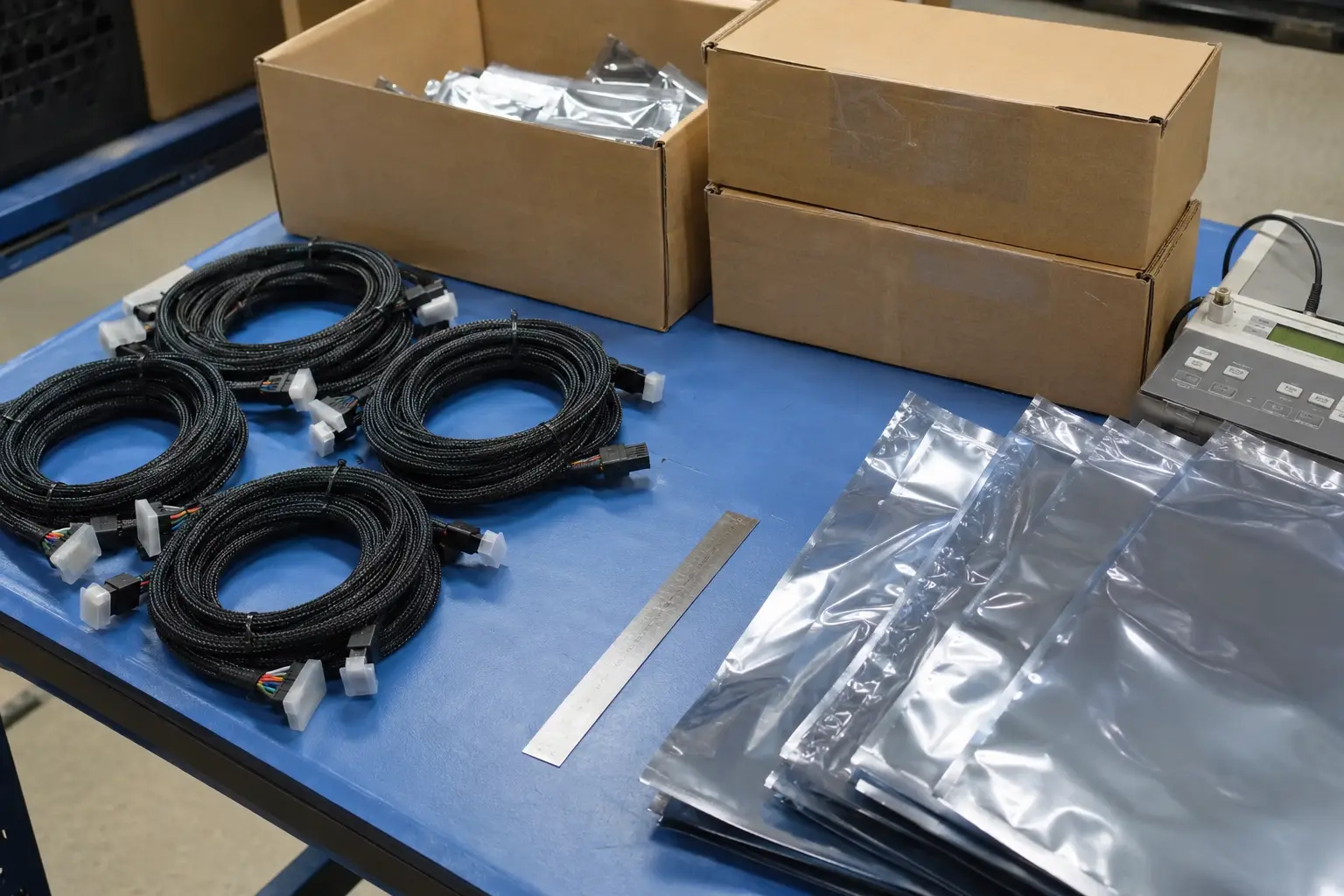
Part labels, batch references and packaging requirements are stated per project.
Compare connector families, verify breakout direction or use the RFQ preparation guide. Unknown details can remain open for review.
01Endpoints02Check03Build route04QuoteOne clear OEM/ODM cable project path—from your requirement through engineering, sample approval and production.
Share your cable idea.
Confirm fit and details.
Approve scope and price.
Build and validate samples.

Manufacture the approved cable.

Check, pack and deliver.
| Stage | You provide | We coordinate | Result |
|---|---|---|---|
| 01 · Start | Application, equipment, connector photo or drawing | Review the requirement and list missing details | Clear RFQ scope |
| 02 · Develop | Answer technical questions and approve the sample | Coordinate drawing, quotation and prototype | Approved cable specification |
| 03 · Deliver | Release PO and confirm shipping information | Manage production, inspection, packing and shipment | Finished goods and documents |

